
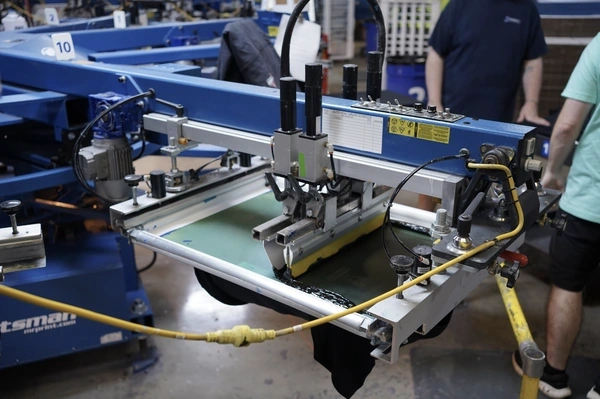
Ask three printers to quote the same shirt and you might get three different methods back: screen printing, DTG, or DTF. All three put your logo on fabric, and each one produces a noticeably different garment at a noticeably different price. The acronyms make it sound complicated. It is not.
None of these methods is the best. Each one wins a specific kind of job, and a shop that pushes one answer for every order is usually just selling you the machine it owns. Here is what each method actually does, in plain English, and how to know which one your order needs.
What is the difference between DTG, DTF, and screen printing?
Screen printing pushes ink through mesh stencils and rules large orders with bold, simple artwork. DTG, short for direct to garment, inkjets full color designs straight into cotton fabric and suits small runs with detailed art. DTF, direct to film, prints a transfer that heat presses onto almost any fabric at almost any quantity.
Three questions decide which one you need: how many pieces, how complex the artwork, and what the garment is made of. Get those three answers on the table before anyone quotes, and the right method usually announces itself. Everything below is just the reasoning behind that sorting.
How each method gets ink onto fabric
Screen printing is the veteran. Each color in your design gets its own stencil, ink gets pressed through the mesh, and heat cures it into place. Building those screens takes real labor, which is why small orders carry setup fees, but once the screens exist the press runs fast and every additional shirt gets cheaper. It is a factory process, and it behaves like one.
DTG works like a photo printer for clothing, spraying water based ink directly into the fibers after a pretreatment. No screens, no setup, so printing one shirt takes about the same effort as printing thirty. DTF prints your art onto a film sheet, bonds adhesive powder to it, and a heat press transfers the whole design onto the garment. Because the film carries the design, DTF lands cleanly on cotton, polyester, blends, nylon, hats, bags, and placements where the other methods struggle.
Cost and quantity: where each one wins
Screen printing owns volume. Setup charges spread across hundreds of pieces until decoration costs pennies per shirt, which is why a one color print on 300 event tees is still the cheapest professional decoration in the industry. Below roughly two dozen pieces, those same setup fees make screen printing sting, and the quote will tell you so.
DTG and DTF flip that math. With no screens to build, a run of ten shirts is priced sanely, and a design with eight colors costs the same as a design with one. DTF holds a particular edge in the middle ground: transfers gang efficiently onto film sheets, so orders of 50 to 150 pieces with colorful artwork often quote better in DTF than in either rival. Treat all of this as pattern rather than promise, since artwork size and garment choice swing every number.
Feel, durability, and how each one ages
A properly cured screen print bonds with the fabric and survives years of washing, especially simpler designs on cotton. DTG feels the softest of the three because the ink soaks into the fibers instead of sitting on top, though prints on dark garments rely on a white underbase and can lose a shade of vibrancy over many wash cycles.
DTF sits on the surface of the fabric, like a modern and far better behaved descendant of the old iron on transfer. Wash durability and stretch are excellent, but there is a hand you can feel, especially on large solid designs. The practical translation: when softness matters most, choose DTG on cotton. When you need bulletproof color on a tricky fabric, DTF earns its slightly heavier feel.
Fabric and artwork limits worth knowing
DTG demands cotton, and the higher the cotton percentage the better the result. Put DTG ink on polyester and the print washes out dull and faded. Screen printing handles most fabrics but charges by the color, so photorealistic images and soft gradients get expensive fast, and performance fabrics call for specialty inks that not every shop stocks.
DTF is the flexibility champion: full color on nearly any material, including sleeves, hats, and awkward seam adjacent placements. Its weak spot is enormous solid coverage, which can feel like wearing a decal on a hot day. Fine detail and photography favor DTG and DTF, big bold branding in a few colors favors screens, and a good decorator will steer each design to the press where it belongs.
Bottom Line
Screen printing wins big runs with bold artwork, DTG wins small cotton runs that need softness and detail, and DTF wins mixed fabrics, mid size quantities, and full color logos. The right answer changes from order to order, which is exactly why the method conversation should happen before the quote does. Signet Marketing produces work across all three methods and specs each job by quantity, artwork, and fabric rather than by habit. Send us your design and we will tell you exactly how it should be printed and why.
Recent Comments